A thirsty supply chain
Conventional paper is water-intensive at multiple steps, from growing and processing the trees to the pulping itself. It adds up to a footprint most people never see.
A lighter crop
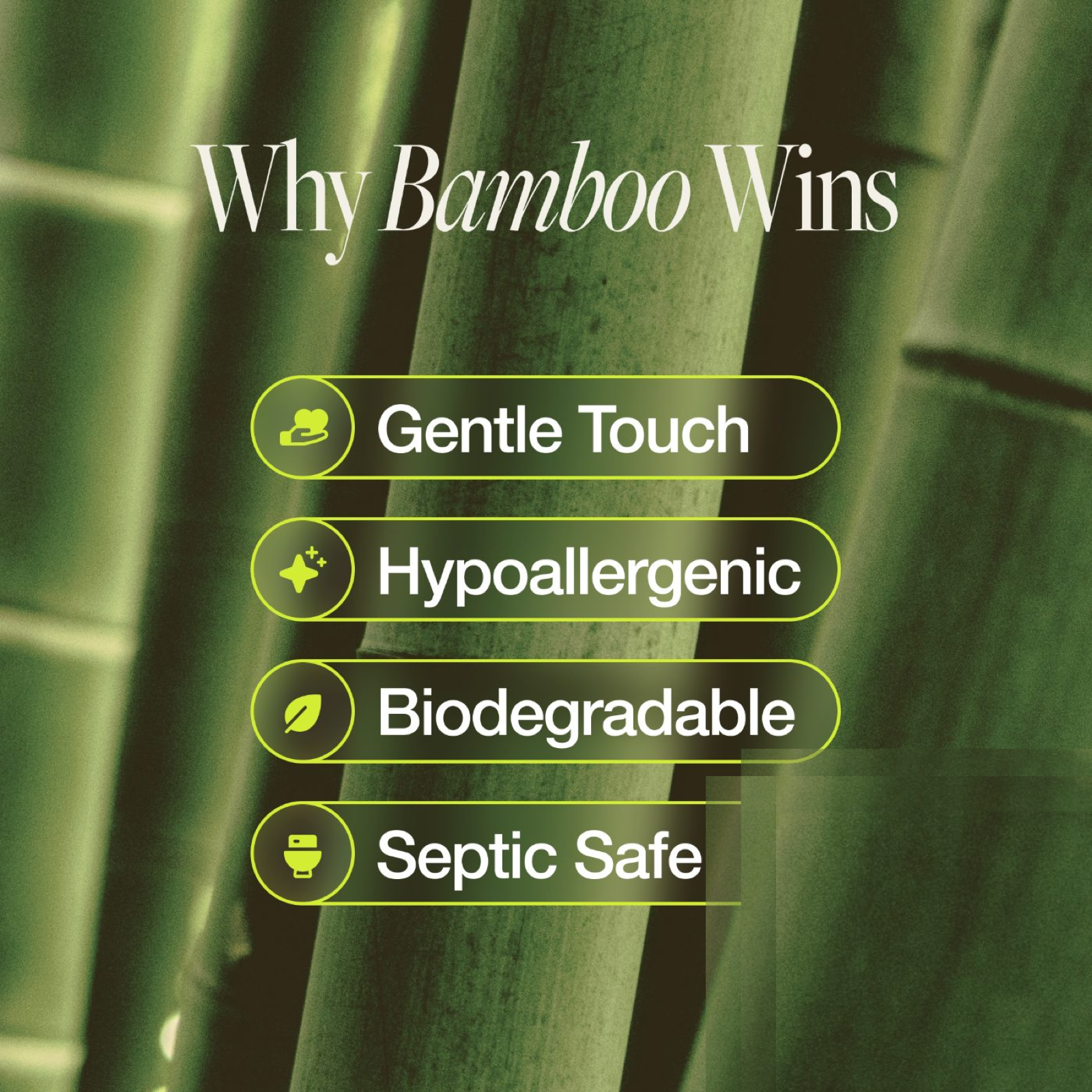
Bamboo grows in suitable climates with far less water and, critically, without the irrigation-and-replant cycle that timber demands. Less input per pound of fiber means a lighter footprint per roll.
Pair that with no pesticides and self-regenerating roots, and the resource profile gets dramatically friendlier.
Why small swaps scale
One household switching its paper barely registers alone. Multiply it across a neighborhood, a city, a subscriber base, and the saved water becomes very real.